Driven by curiosity. Driving change
Standardising DNA and RNA nanostructures with NanostarDB

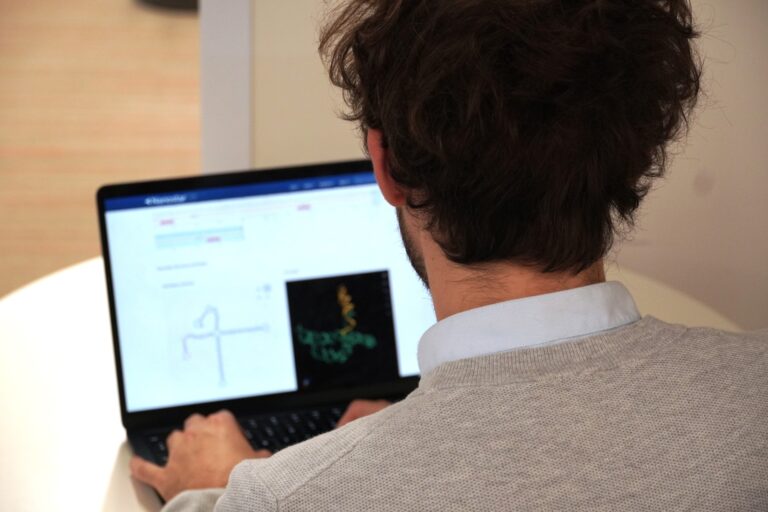
Researchers have developed NanostarDB, an interactive knowledgebase that standardises how DNA and RNA nanostructures are described, shared and reused, helping researchers build on existing designs and accelerating progress across the field.
Writing in Nature Nanotechnology, researchers describe how NanostarDB brings together DNA and RNA nanostructure designs in a standardised, searchable format.
The work was led by Adam Knirsch and carried out in the research groups of Lorenzo Di Michele in the Department of Chemical Engineering and Biotechnology and Pietro Cicuta in the Cavendish Laboratory.
PhD student Adam, said: “Currently, reusing these nanostructures is difficult because published studies often leave out key details or describe them in confusing ways. NanostarDB solves this by giving scientists an easy-to-use platform to share and search designs.
“This helps researchers quickly pick the right structure for their project and makes it much easier for researchers outside the field to use these nanostructures for new applications.”
Nucleic acid nanostructures are programmable assemblies made from DNA or RNA. Researchers use them to create advanced materials, molecular sensors, therapeutic technologies and synthetic biology tools.
As the field has grown, researchers have increasingly reused and adapted existing designs rather than creating new ones from scratch. However, the information needed to reproduce these structures is often fragmented across papers and supplementary materials, creating barriers to reuse.
NanostarDB aims to address this challenge by providing a common framework for describing, sharing and exploring nanostructure designs. The researchers hope the platform will improve reproducibility, encourage community standards and make nucleic acid nanotechnology more accessible to both experts and newcomers.
“Nucleic acid nanotechnology has matured rapidly over the past two decades,” said Di Michele. “To support future advances, researchers need reliable ways to share, identify and build on existing designs. NanostarDB provides the infrastructure to help make that possible.”
The researchers hope the community-driven, open-source resource will continue to grow as scientists contribute new designs and annotations. Over time, they believe it could help support new applications across synthetic biology, biomaterials and other areas of nucleic acid nanotechnology.
The database can be accessed at: https://nanostardb.org/