
 Driven by curiosity. Driving change
Home > CBFM
Computational BioFluid Mechanics (CBFM)
Dr Shelly Singh-Gryzbon
About us
Engineering better treatments through computational modelling of blood flow
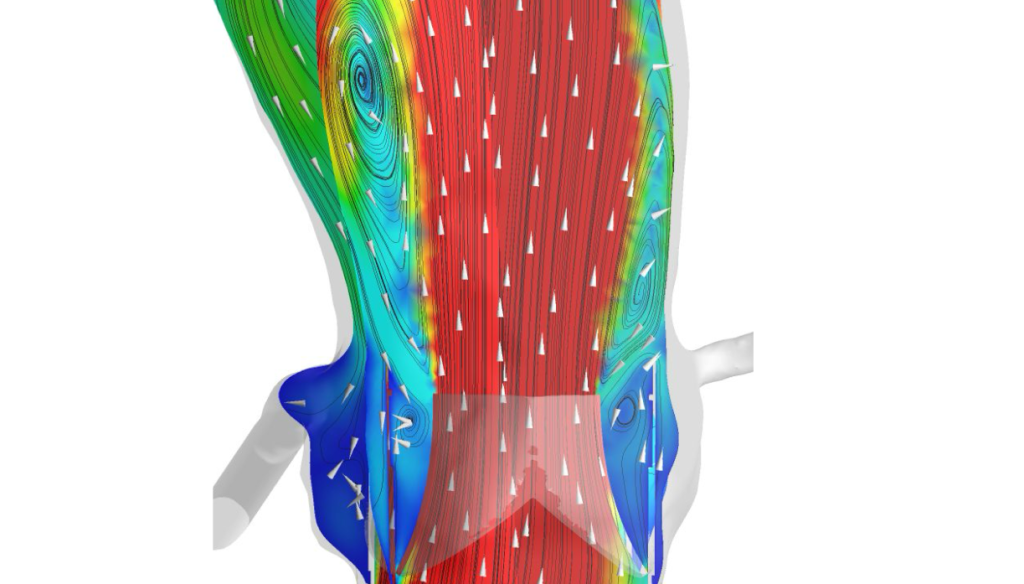
The Computational Biofluid Mechanics Group develops computational models to better understand how blood flows through the heart, brain and vascular system in health and disease.
By combining engineering, fluid mechanics, biomechanics and medical imaging, we create patient-specific simulations that improve our understanding of cardiovascular and neurovascular diseases, support medical device development, and help advance personalised healthcare. Our research sits at the intersection of engineering and medicine, translating computational methods into tools with real clinical impact.
Research overview
Blood flow plays a critical role in the development, diagnosis and treatment of many diseases. The Computational Biofluid Mechanics Group uses advanced numerical modelling and simulation techniques to investigate how blood interacts with blood vessels, tissues and medical devices in complex biological systems.
Our work combines computational fluid dynamics, structural mechanics and medical imaging to develop predictive models of cardiovascular and neurovascular function. Through close collaboration with clinicians and healthcare researchers, we aim to improve treatment planning, optimise medical devices and contribute to the development of digital-twin technologies for personalised medicine.
Research interests
Cardiovascular biomechanics
Understanding how blood flow interacts with the heart and blood vessels to improve the diagnosis and treatment of cardiovascular disease.
Neurovascular modelling
Investigating blood flow in the brain to better understand conditions such as aneurysms and stroke and to support clinical decision-making.
Medical device optimisation
Using computational simulations to evaluate and improve the performance of cardiovascular devices, including stents, heart valves and minimally invasive therapies.
Digital twins for healthcare
Developing patient-specific computational models that predict treatment outcomes and support personalised treatment planning.
Group leader
Dr Shelly Singh-Gryzbon
Dr Shelly Singh-Gryzbon is an Assistant Professor in the Department of Chemical Engineering and Biotechnology at the University of Cambridge. She leads the Computational Biofluid Mechanics Group, where her research focuses on developing computational tools to better understand cardiovascular and neurovascular disease and improve patient care.
Shelly obtained her BSc in Chemical and Process Engineering from The University of the West Indies before completing her MSc and PhD in Chemical Engineering at Imperial College London. Her doctoral research focused on computational modelling of aortic biomechanics in patients with Marfan syndrome. She subsequently undertook postdoctoral research at the Georgia Institute of Technology, specialising in cardiovascular fluid mechanics and medical-device modelling.
Her current research combines fluid dynamics, biomechanics and computational modelling to investigate cardiovascular and neurovascular disease, optimise device performance and support the development of personalised treatment strategies.
→ Find out more
Prospective students and collaborators
We welcome enquiries from prospective PhD students, postdoctoral researchers and collaborators interested in applying computational methods to address clinically relevant healthcare challenges.