Driven by curiosity. Driving change

Drug delivery

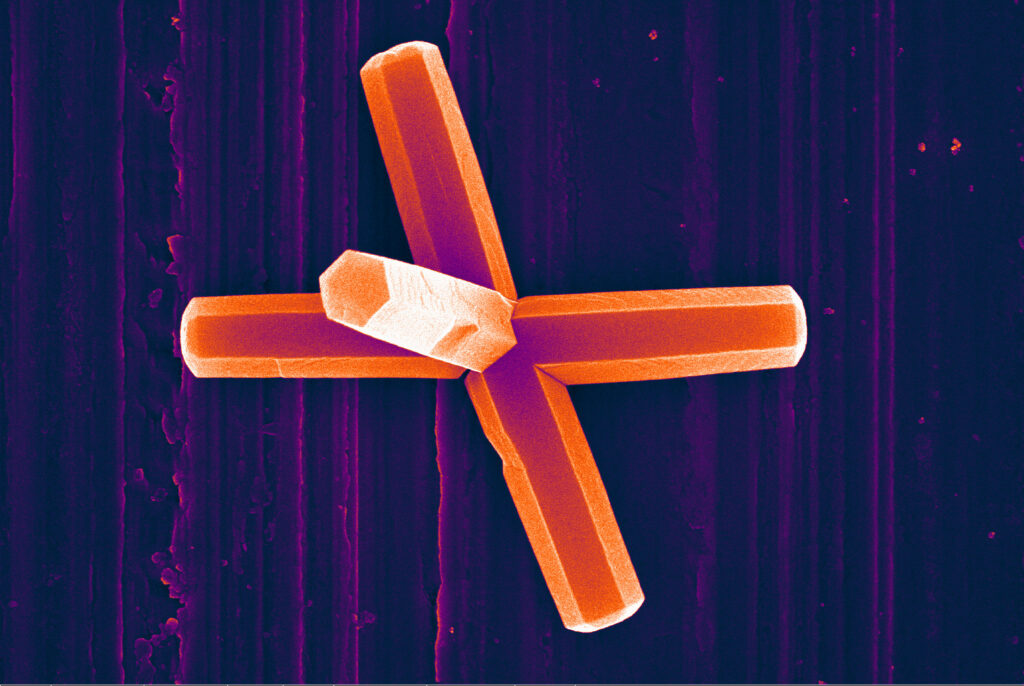
Although there have been great advances in cancer treatment, where survival rates have doubled in the last 40 years, cancer remains a key health concern. This is especially true for hard-to-treat cancers such as mesothelioma where very little improvement has been obtained in decades. A main challenge is the development of better drugs, including treatments based on macromolecules capable of interfere the cell signalling system such as RNAs and inhibitor peptides. These macromolecules are potentially the most powerful cancer drugs that exist, but still there is no feasible way of getting them delivered to the tumour, and therefore require a drug delivery system.

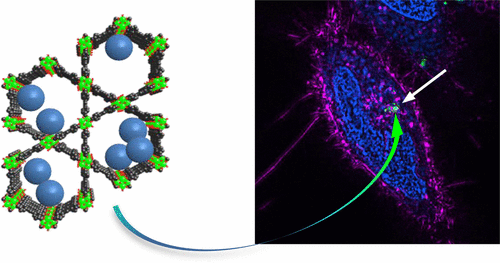
A new line of research from our lab has been the development of computational tools (J. Mat. Chem. B 2013) to understand this process, and the design of functional materials based on amorphous MOFs for drug delivery (Chem. Commun. 2015, J. Am. Chem. Soc. 2017). We have advanced in creating materials with outstanding loading capacities, extended drug-release times, and grafted functionalities to improve their performance (Adv. Health. Mat. 2016, Chem 2017, ACS. Appl. Mat. Interfaces 2017). We are working in the understanding of how the external surface of the MOF affects the endocytosis routes of these materials.

All this has opened new future directions using MOFs as drug delivery vehicles.

Selected publications

A figure from the Adsorption and Advanced Materials group.

Temperature Treatment of Highly Porous Zirconium-Containing Metal–Organic Frameworks Extends Drug Delivery Release
Michelle H. Teplensky, Marcus Fantham, Peng Li, Timothy C. Wang, Joshua P. Mehta, Laurence J. Young, Peyman Z. Moghadam, Joseph T. Hupp, Omar K. Farha, Clemens F. Kaminski, David Fairen-Jimenez, J. Am. Chem. Soc., 2017, 139 (22), pp 7522–7532.

A visualisation of a metal-organic framework

Endocytosis Mechanism of Nano Metal‐Organic Frameworks for Drug Delivery
Claudia Orellana‐Tavra, Sergio A. Mercado, David Fairen‐Jimenez, Adv. Healthcare. Mater., 2016, 5, pp 2261–2270.

A figure from the Adsorption and Advanced Materials group.

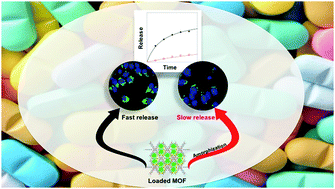
Amorphous metal–organic frameworks for drug delivery
Claudia Orellana-Tavra, Emma F. Baxter, Tian Tian, Thomas D. Bennett, Nigel K. H. Slater, Anthony K. Cheetham, David Fairen-Jimenez, Chem. Comm., 2015, 51, pp 13878–13881.

A visualisation of a metal-organic framework

Screening of bio-compatible metal–organic frameworks as potential drug carriers using Monte Carlo simulations
María C. Bernini, David Fairen-Jimenez, Marcelo Pasinetti, Antonio J. Ramirez-Pastor, Randall Q. Snurr, J. Mater. Chem. B, 2014, 2, pp 766-774.
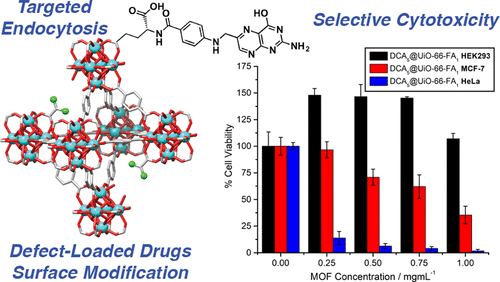
A figure from the Adsorption and Advanced Materials group.

Isabel Abánades Lázaro, Salame Haddad, José M. Rodrigo-Muñoz, Claudia Orellana-Tavra, Victoria del Pozo, David Fairen-Jimenez, Ross S. Forgan, ACS Appl. Mater. Interfaces, 2018, 10 (6), pp 5255-5268.

A visualisation of a metal-organic framework
Selective Surface PEGylation of UiO-66 Nanoparticles for Enhanced Stability, Cell Uptake, and pH-Responsive Drug Delivery
Isabel Abánades Lázaro, Salame Haddad, Sabrina Sacca, Claudia Orellana-Tavra, David Fairen-Jimenez, Ross S.Forgan, Chem., 2017, 2 (4), pp 561-578.
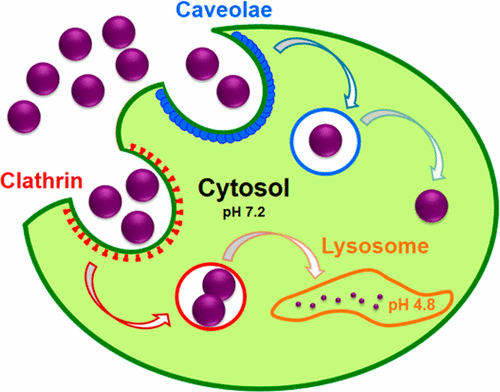
Tuning the Endocytosis Mechanism of Zr-Based Metal–Organic Frameworks through Linker Functionalization
Claudia Orellana-Tavra, Salame Haddad, Ross J. Marshall, Isabel Abánades Lázaro, Gerard Boix, Inhar Imaz, Daniel Maspoch, Ross S. Forgan, David Fairen-Jimenez, ACS Appl. Mater. Interfaces, 2017, 9 (41), pp 35516-35525.

Adsorption and Advanced Materials group